August 3rd, 2026
5 min read
Human-elephant conflict in India’s Terai Elephant Reserve threatens both endangered Asian elephants and the farming communities that share their land.
WWF-India and NTT DATA are showing how practical AI, data analytics, and community engagement can help reduce conflict while improving farmers’ livelihoods.
The initiative demonstrates that successful conservation starts with people, using technology to solve human challenges while protecting biodiversity.
AI helping address human conflict with wildlife
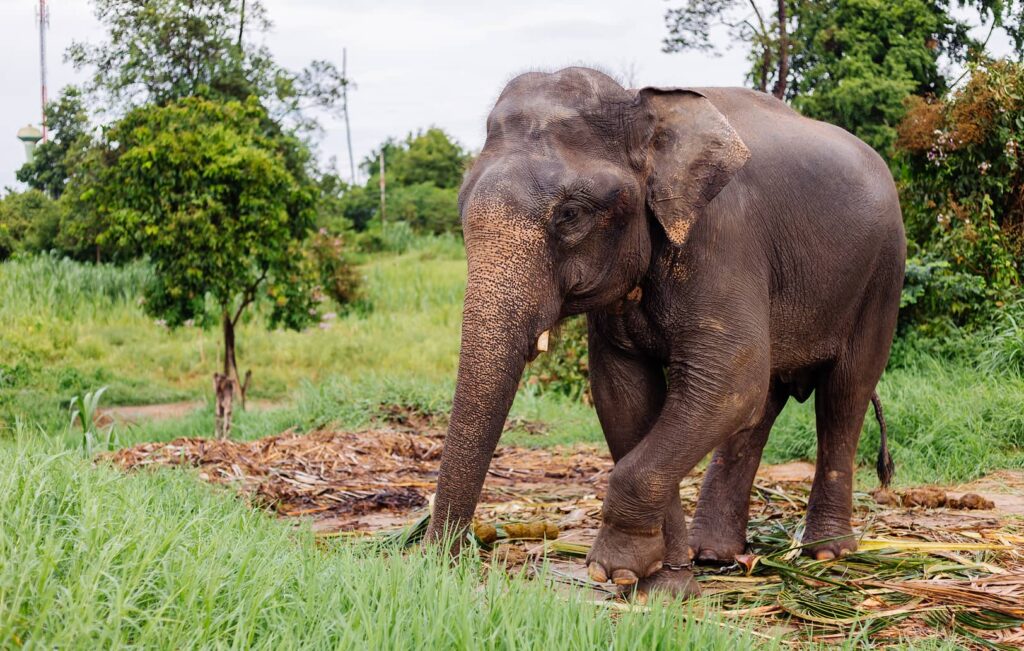
At 3,049 square kilometers, the Terai Elephant Reserve spans the border between India and Nepal and serves as one of the most important migration corridors for endangered Asian elephants. Created in October 2022, it is India’s 33rd elephant reserve and has a history of human–elephant conflict that threatens both people and wildlife.
As human populations grow and more land in the reserve is used for agriculture and development, elephants increasingly travel through villages and farmland while following their traditional migration routes. This can lead to crop destruction and property damage, resulting in dangerous encounters and hardship for some farmers. For families that rely on farming for their income, losing even a single harvest can have serious financial consequences.
Protecting elephants therefore requires protecting the people who live alongside them. To address this challenge WWF-India, with support from NTT DATA, launched a conservation initiative using an AI-enabled early warning system to track and map elephants’ movement patterns in real time and predict future movements. This led to the creation of safer corridors for elephant migration and a reduction of human–elephant conflict in the Terai Elephant Reserve.
When we are looking at projects, we don't necessarily look at it from a technology angle first. It's always the human angle first, and how can technology help appease some of those human issues that we're having.
Practical AI solving practical problems
The joint WWF India-NTT DATA initiative combines several complementary approaches including AI-enabled cameras that monitor elephant movement. These cameras are capable of machine learning and computer vision to automatically interpret what they see in real time and push out this information.
For the Terai Elephant Reserve initiative, this information is sent to digital dashboards that notify both forest officials and villagers when elephants are on the move and approaching populated areas. The intelligence of the AI cameras essentially acts as an early warning system that allows communities to prepare before elephants arrive. And ultimately, the data collected from the AI cameras helps researchers build models to better understand elephant movement across the India-Nepal border and inform longer-term planning for the region.
“In this case, it’s a story of incremental AI,” says Bahulkar. “What is really different in this project is the immediate impact the incremental AI and complementary technology have made in the lives of the farmers. It’s changed lives.”
Rather than introducing technology at the outset of the project, WWF-India and NTT DATA spent the first year listening to local communities and understanding their challenges. The project focused on building relationships before recommending changes. As Bahulkar says, “The first year you’re really building trust… The first thing that we did was listen to the problems, understand them without offering any advice, just establishing that we were there to help.”
Using data to improve farming outcomes
In addition to being used to monitor elephant migration, AI is also helping farmers decide what crops to grow to deter elephants. In the region, most farmers grow grass-based crops like maize, sugarcane and paddy – all of which appeal to elephants. Implementing AI-driven systems to analyze soil composition and measure soil health helped identify other crops that are suited to local conditions and that don’t attract elephants.
The analysis revealed that turmeric, a traditional crop once common in the region that has again become commercially viable, could grow well in the area. Because elephants avoid the smell of turmeric, farmers began planting it around the edges of their fields while continuing to grow their food crops in the center. This simple change reduced crop damage by elephants while maintaining and, in many cases, improving farm income. It also meant farmers no longer needed to spend as many nights protecting their fields from elephants.
Bahulkar highlights the story of a farmer and his family who live near one of the primary elephant migration corridors between Nepal and India. Under constant duress, they often spent sleepless nights guarding their fields, knowing that encounters with elephants could threaten both their livelihoods and their safety. However, since the farmer planted turmeric, that is no longer the case, and it illustrates why reducing conflict requires long-term solutions that benefit both people and wildlife to live in harmony.
Technology with people at the center
NTT DATA supports this initiative through funding, sustainability leadership, and technology expertise. This includes deploying AI and using environmental data and analytics to map elephant migration routes, support safer wildlife corridors, determine crops to deter elephant intrusion, assess habitat quality, guide wetland restoration planning, and improve water access for elephants.
The project reflects NTT DATA’s belief that technology creates the greatest impact when it improves people’s lives while addressing broader environmental challenges.
Build trust with local communities to drive long-term success
Community participation and trust is central to every stage of the project. Some of the most important local volunteers in the reserve are known as Gajamitras. They are trained to monitor elephant movement, alert nearby villages of dangers, and help safely redirect elephants away from populated areas.
When the project began, not all farmers embraced the new technology-assisted approach immediately. Younger farmers generally adopted new ideas more quickly, while older generations were more cautious. Because the Gajamitras volunteers are trusted members of their communities, they also became advocates for adopting new farming practices and technologies.
“It was kind of a case of change management where you start with not saying anything but listening first,” explains Bahulkar. “After you’ve listened you come back with incremental changes that are more digestible for the people.”
Creating measurable social impact
The project delivers benefits that extend beyond conservation, including reduced crop losses and increased farm productivity, which results in higher household incomes. These enhanced financial prospects improve the quality of life for the farming families.
As Bahulkar observes, “One of the biggest contributions of this initiative is more money in the pockets of people. With the decreased crop losses, it means more sellable crop for them. It is a big driver of this program.” There is also greater safety for people and wildlife, with fewer dangerous encounters between farmers and elephants.
It's not just about protecting biodiversity, it's also about listening to the community.
Better AI and analytics for better conservation
As more data is collected, AI and analytics continue improving researchers’ understanding of elephant migration patterns. During the project, researchers profiled 55 individual elephants and discovered that one elephant traveled much farther across the India-Nepal landscape than expected.
Insights like these help conservation teams better understand migration behavior and improve long-term planning. The Terai Reserve initiative demonstrates how practical technology, local leadership, and community engagement can work together to reduce human-wildlife conflict and help farmers.
While this specific challenge involves elephants, the broader approach could be adapted for conservation efforts around the world where people and wildlife compete for space. “It’s not just about protecting biodiversity, it’s also about listening to the community,” says Bahulkar.
This is the real lesson of the Terai Reserve initiative for WWF-India and NTT DATA. The success of AI does not come from replacing human insight; it comes from listening to people and using technology in their service rather than putting it ahead of them. As technology grows more capable, lasting change will come from those who lead with both human understanding and innovation.