August 3rd, 2026
3 min read
Labor shortages, aging populations and the loss of agricultural expertise threaten food production, productivity and sustainability in Japan and other parts of the world.
AI-driven agricultural automation technologies provide a solution, supporting sustainable farming and stable food supplies.
With the needs and experiences of farmers at the forefront, NTT DOCOMO collaborates with industry, government and academia on technologies such as AI-powered drones, autonomous robotics and sensing technology to help address food security, labor demands, pesticide use and farming efficiency.
Autonomous farming solutions for a more sustainable future
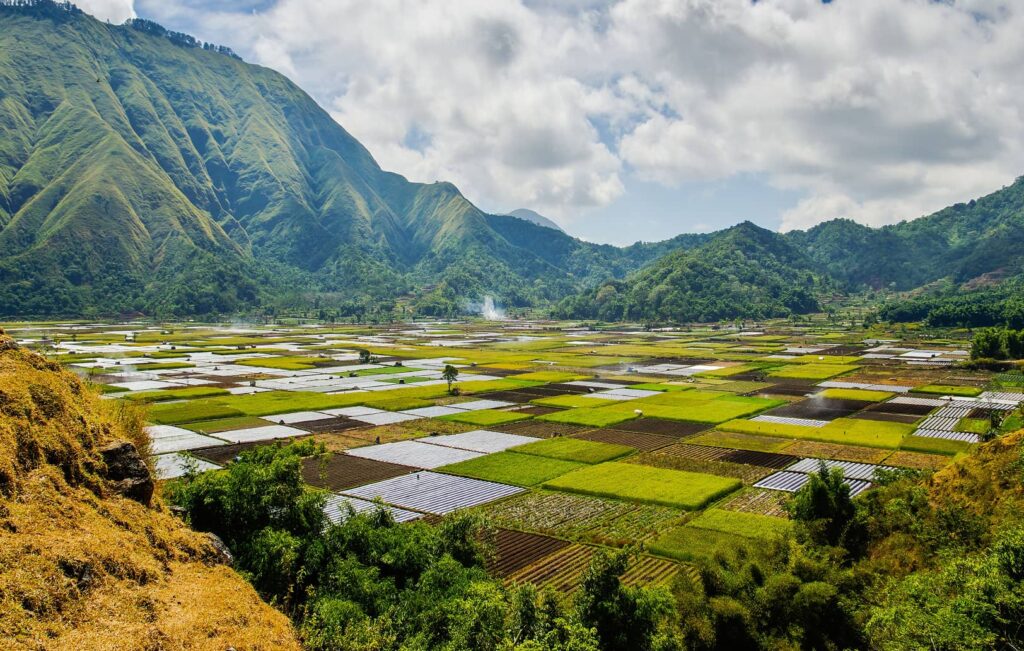
Agriculture in Japan is under pressure. There’s a severe labor shortage as the birthrate is declining and the population is aging, while decades of farming expertise risk being lost as experienced farmers retire.
The consequences are serious. Food security and self-sufficiency are under threat, due to potentially greater reliance on imports. Rural economies are vulnerable as farming declines. Even long-term environmental sustainability is at risk if proper farming techniques are not passed on.
Farmers are doing their best to improve productivity, reduce environmental impact and strengthen food self-sufficiency but it is a huge challenge. Tasks such as weed control, disease inspection and precision cultivation are labor-intensive and often require highly specialized knowledge. For instance, farmers must inspect vast fields manually or use specialized machinery, both of which require deep knowledge and experience.
As countries around the world face similar demographic shifts, scalable agricultural automation technologies will become increasingly important for maintaining stable food supplies while reducing environmental impact. Equally important is designing these solutions around the real needs of the people who use them.
NTT DOCOMO brings human-centered AI automation to agriculture
NTT DOCOMO is addressing these farming challenges with human-centered technologies, including AI-powered drones, sensing technologies and autonomous robotics systems developed to automate and optimize agricultural operations. These technologies put the needs, values and experiences of the farmers first in order to support the people using them, thereby helping to address labor shortages and real-life situations farmers face in the field.
To do this, NTT DOCOMO is working in collaboration with farmers, research institutions, manufacturers, government agencies, local governments, and agricultural partners. Together, they are developing solutions that can help to reduce manual labor, digitize farming expertise and improve precision farming practices, which is a farming strategy that uses data, technology and GPS to manage crops – and it is all built around an approach that starts with farmers themselves. For NTT DOCOMO, human-centered AI is not about replacing farmers, but about making their knowledge scalable and accessible to the next generation.
How weeding robots, drones and AI are changing farming operations
In Japan, NTT DOCOMO is applying its field knowledge coupled with telecommunications, sensing robotics, and AI expertise to modernize agricultural operations, reflecting its characteristic approach of combining technologies across multiple domains. Its solutions capture real-world knowledge and are designed in such a way that they can be used by any farmer, regardless of technology experience or expertise.
-

Automating precision weeding using autonomous tractor and cultivator systems
Weeding is one of agriculture’s most persistent labor challenges. To address this, NTT DOCOMO developed autonomous cultivation systems that simplify complex tractor operations.
Cameras mounted on tractors recognize crop rows in real time, while AI automatically adjusts steering and cultivator positioning. This allows farmers to perform highly precise weeding even in environments where current GPS-based auto-steering systems are unreliable – such as on sloped fields where readings can drift by several centimeters or in areas with poor connectivity or physical obstructions. NTT DOCOMO’s AI system supplements GPS by using a front-mounted camera and image recognition AI to directly detect crop ridges and automatically control the tractor’s steering wheel. NTT DOCOMO built the entire system end-to-end, including hardware integration.
What’s particularly interesting is the deliberate choice of local processing over cloud processing, which stems both from NTT DOCOMO’s experience as a telecommunications company and its understanding of farmers’ needs. The system’s processing runs locally on the device rather than in the cloud, so it can function without the need for communication services – a major advantage in mountainous regions and vast farmland areas where connectivity is often unstable. This enables autonomous driving decisions without relying on communication networks. In contrast to the previous image recognition platform which relied on closed networks and 5G, NTT DOCOMO’s approach is built specifically for sites where connectivity doesn’t reach.
For greenhouse environments, NTT DOCOMO created a compact autonomous weeding robot capable of navigating dense crop layouts and narrow rows. The robot uses image recognition AI technology – developed by NTT DOCOMO – to identify weeds, autonomously travel through rows, and perform continuous operation with automatic turning capabilities.
-
Cutting pesticide use by as much as 90% with drone-based weed detection systems
Drones capture aerial imagery of fields, while AI models analyze the data to identify where weeds are most concentrated. That way, instead of spraying herbicide across entire fields, farmers can target affected areas only, dramatically reducing pesticide use and lowering environmental impact.
-
Detecting diseased potato plants automatically with drone footage and an AI image recognition system
Traditionally, identifying diseased seed potato plants required experienced workers to manually inspect fields. It is a labor-intensive process, and it relies on a farmer’s knowledge developed over many years.
To automate this, NTT DOCOMO developed AI-powered disease detection for seed potato fields. The system uses aerial drone imagery and image recognition AI so diseased plants can now be detected automatically. Not only does this reduce labor requirements, but it also preserves the expertise of skilled farmers in digital form, allowing it to be passed along to the next generation.
NTT DOCOMO is working to transform sustainable agriculture
First and foremost, NTT DOCOMO believes sustainable technology adoption requires solutions designed around real-world farming needs. To develop these solutions, NTT DOCOMO is working in collaboration with research institutions, manufacturers, government agencies, local governments, and agricultural partners – and, importantly, this multi-stakeholder co-creation philosophy involves the farmers themselves.
NTT DOCOMO’s unique approach is designed to improve agricultural productivity, reduce environmental impact, adapt to labor shortages, and support the long-term resilience of food systems both in Japan and around the world.
The future of farming
NTT DOCOMO is committed to challenging itself and its partners to develop technology that is usable in the field. That means designing human-centered solutions with and for the real people who will be using them every day. The focus is on solving farmers’ problems.
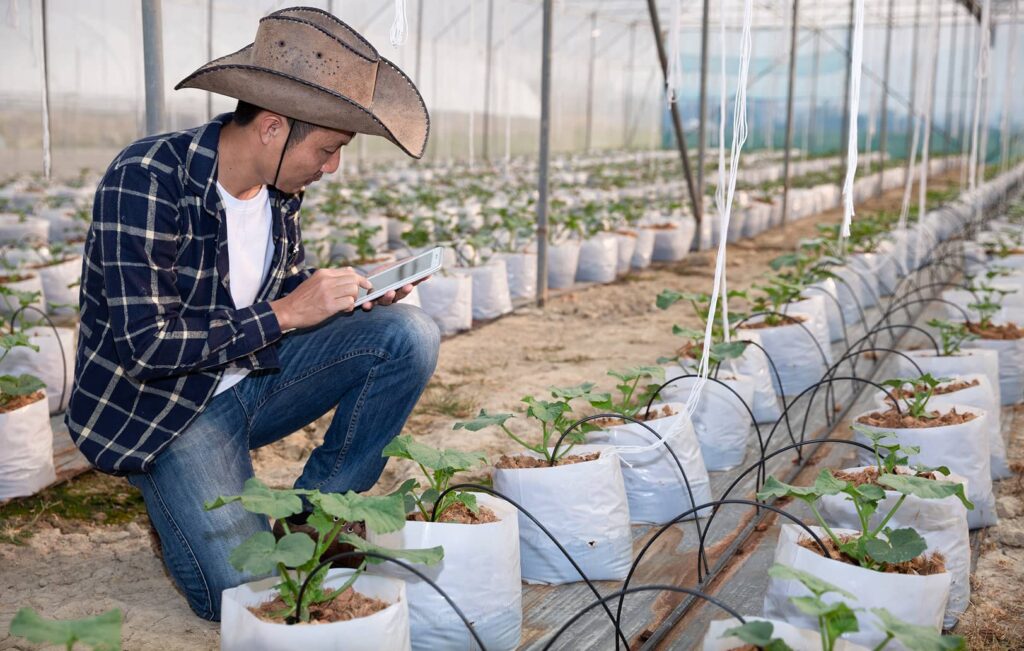
“Over the next five to 10 years, we envision AI robotics and autonomous agricultural systems evolving into fully connected smart farming ecosystems,” said NTT DOCOMO Manager Takuya Kitade. “Think of it as a cycle where using a technology for one purpose positively impacts other tasks. For example, when using an automatic weeding robot for weeding, we want to utilize the collected data to automatically detect and notify farmers of unusual crop conditions, such as water or fertilizer shortages or pest infestations.”
In the future, these technologies will offer farmers such advancements as fully autonomous fleets of drones and robots coordinating field operations in real time and AI systems capable of predicting crop disease outbreaks before visible symptoms appear. Precision agriculture platforms will be able to optimize water, fertilizer, pesticide and labor simultaneously. Digital farming systems will preserve and transfer agricultural expertise across generations, and integrated rural connectivity networks will be able to combine telecommunications infrastructure with agricultural automation.
And this technology will soon expand beyond agriculture. NTT DOCOMO is building a robotics solution that substitutes labor-intensive tasks in many industries, working in conjunction with various forms of robots and vehicles to shoulder human labor. The first step is successful commercialization in the agricultural sector and then leveraging that knowledge to provide value in other industries.
As AI, robotics and sensing technologies continue to advance, autonomous farming solutions could help farmers in countries worldwide address labor shortages, strengthen food security, and build more sustainable agricultural systems.