January 20th, 2026
3 min read
We are equipping drones with a lightning-proof protective cage and a conductive wire. The cage ensures the drones will be able to keep flying even when they’re hit by a high current of electricity, and the conductive wire guides the lightning safely to the ground. Then we fly the drones near thunderclouds at high altitudes to attract and trigger lightning strikes.
This technology in development, named one of Time magazine’s Best Inventions of 2025, is being designed to protect communities and infrastructure from the damaging impact of lightning, and eventually collect renewable energy, too.
The human and economic cost of lightning damage
Lightning can be incredibly destructive. About 24,000 deaths and 240,000 injuries are attributed to lightning each year worldwide. It can destroy power lines and damage electrical infrastructure, which in turn has an economic cost due to power outages and communications failures. In Japan alone, the estimated annual cost of lightning damage ranges from 100 to 200 billion yen.
Traditionally, lightning rods have been the main source of protection for infrastructure and urban areas. However, their protective range is limited, and in some cases, with wind turbines or outdoor event venues for example, it’s simply not practical – or even possible – to install them.
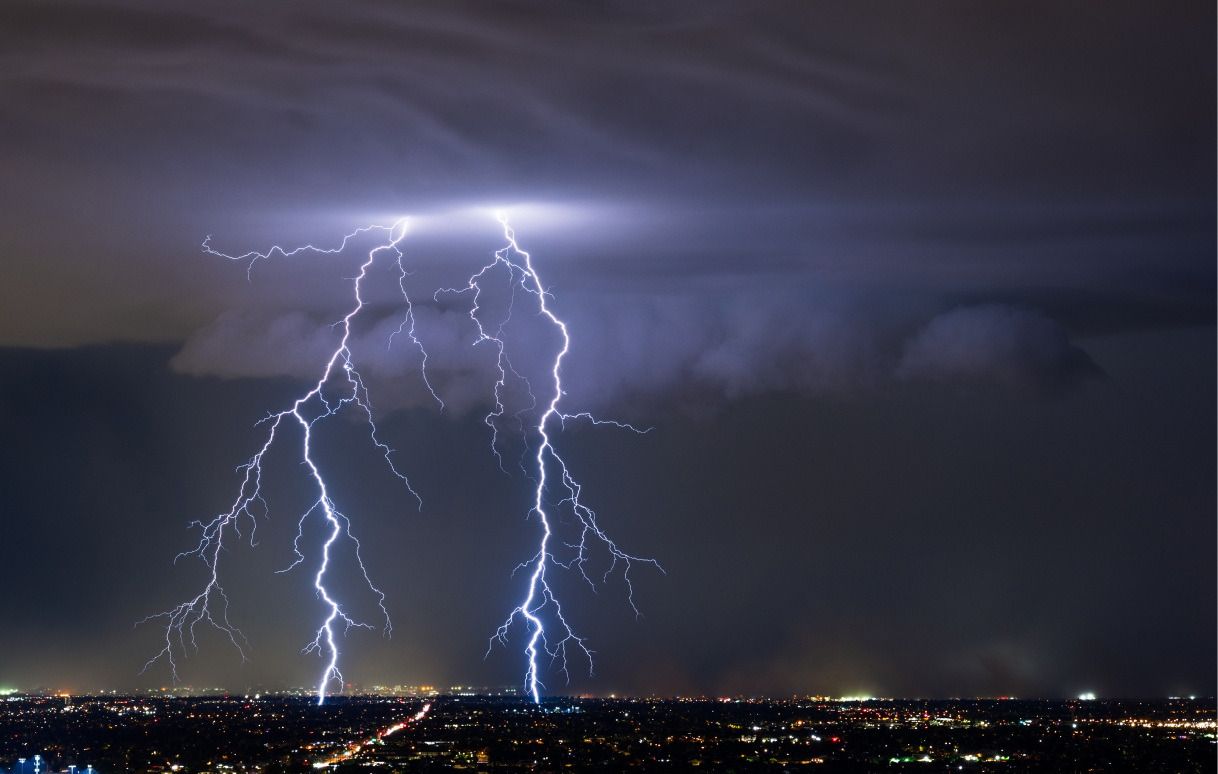
That is why we are developing drone-triggered lightning. Essentially, this involves flying drones into areas just beneath thunderclouds to actively trigger lightning strikes, and then guiding the strike safely away from vulnerable areas.
NTT’s technologies for triggering lightning with drones
To successfully trigger lightning using a drone, it’s crucial that the drone remain operational even after being struck by lightning. It also needs an active triggering method because simply flying a drone under a thundercloud is not enough to attract lightning.
So, NTT is developing two technologies to make this happen:
-

Lightning protection technology for drones
We designed a lightning protection cage to prevent the drone from being damaged and ensure it can still work even if it is struck by lightning. The cage is made of conductive metal. It acts as a shield, redirecting the lightning’s electrical current away from the drone’s internal components, stopping the current from flowing through the drone itself. The cage is also designed to distribute the lightning current radially which cancels out the strong magnetic fields generated by the current and minimizes electromagnetic interference with the drone.
We ran artificial lightning tests on drones equipped with the lightning protection cage and found that the system could withstand artificial strikes of up to 150 kA (five times greater than the average natural lightning strike) without any malfunction or damage, meaning it would work in up to 98 percent of naturally occurring lightning conditions.
-
Electric field-based lightning triggering technology
To trigger lightning, we developed a way to connect the drone to the ground via a conductive wire, with a high-voltage switch installed at the ground. Operating the switch just at the right moment rapidly changes the electric field around the drone and draws lightning toward it.
NTT’s experimental demonstrations of triggering and guiding lightning
To test the viability of this technology, we ran experiments in December 2024 and January 2025 in the mountains of Hamada City, Shimane Prefecture in Japan, where the elevation is 900 meters. We used a scientific instrument called a field mill to monitor the electric field at ground level. Then, as a thundercloud approached and the electric field strength increased, we launched a drone equipped with the lightning protection cage and conductive wire mentioned above.
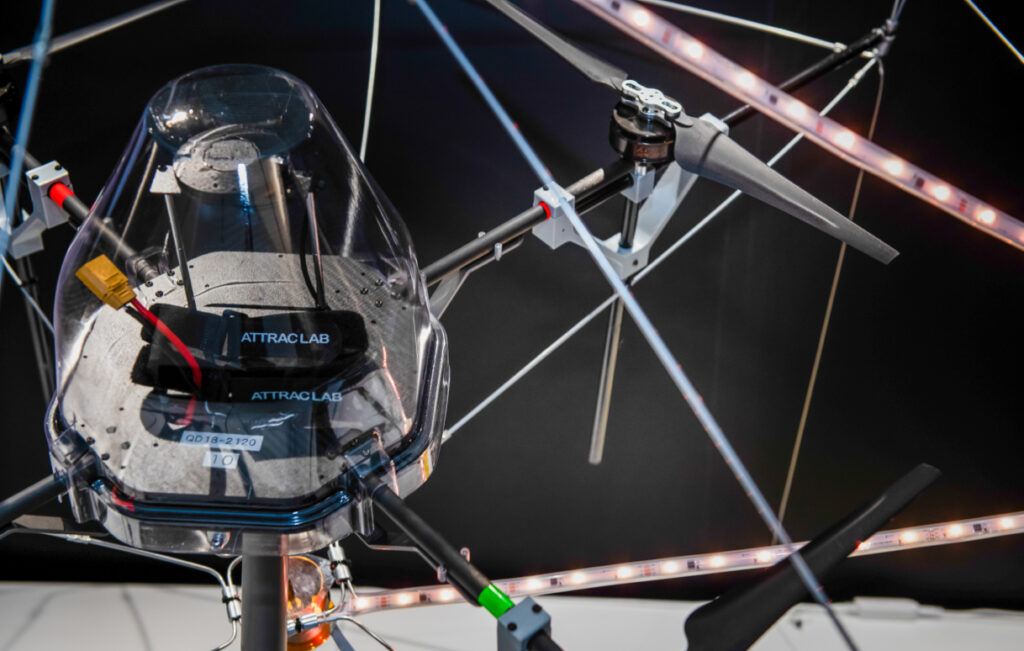
The biggest moment came on December 13, 2024, when we flew the drone toward a thundercloud at an altitude of 300 meters and flipped the switch on the conductive wire that electrically connected it to the ground. This caused a large current of more than 2,000 volts to flow through the wire, accompanied by a significant change in the surrounding electric field strength. This rapid increase in local electric field strength triggered a lightning strike directed at the drone – and that was a world first.
The strike produced a loud crack, a visible flash and minor melting of the protective cage, yet the drone continued flying stably. On that day we confirmed that the drone’s lightning triggering method was effective and that the lightning protection technology worked well, too.
How lightning drones will develop in the future
Drones that predict where lightning will strike, can deliberately trigger it and safely guide it away will help to protect communities and people. They will be able to reduce lightning damage worldwide by absorbing thundercloud energy and preventing lightning from ever reaching the ground. Infrastructure operators such as telecommunications and power companies, along with national and local governments, will eventually be able to use this technology to protect critical facilities from lightning strikes.
But our work is not yet done. We are continuing to advance research and development in high-precision lightning location prediction as well as lightning mechanisms, which are the physics and processes behind how lightning forms and changes. We will also be developing technologies for capturing and storing lightning energy so it can eventually be used as a source of renewable energy.
In the future, we envision a world with greatly reduced lightning damage where the vast amounts of energy produced by lightning can benefit people and our planet.