December 12th, 2025
4 min read
Osaka Expo 2025 brought the world to Japan where more than 150 countries and companies came together to showcase their innovations for a more sustainable people and planet. The Panasonic Group Pavilion, named “The Land of NOMO,” was designed to be sustainable and then ultimately dismantled, with 99 percent of the materials circulated back into society when the six-month Expo closed in October.
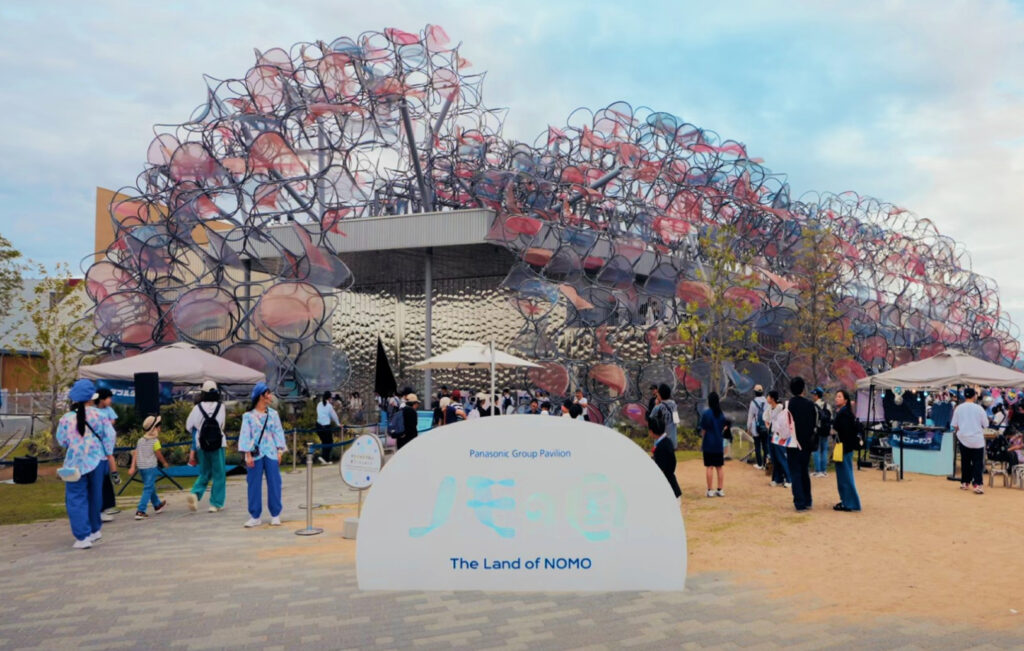
This sustainable approach extended to those beautiful LED lights, powered by hydrogen energy produced, stored and transported on the Expo site. Together, NTT Anode Energy and Panasonic demonstrated the hydrogen supply chain model at the Expo, showcasing the use of renewable energy to help achieve carbon neutrality – and connect the present to the future of energy.
A supply chain to achieve carbon neutrality
NTT Anode Energy was established in 2019 as part of NTT Group, which has an environmental energy vision entitled “NTT Green Innovation toward 2040.” NTT Group is deeply committed to the reduction of emissions worldwide through green hydrogen, including helping Japan meet its goal of achieving carbon neutrality by 2050.
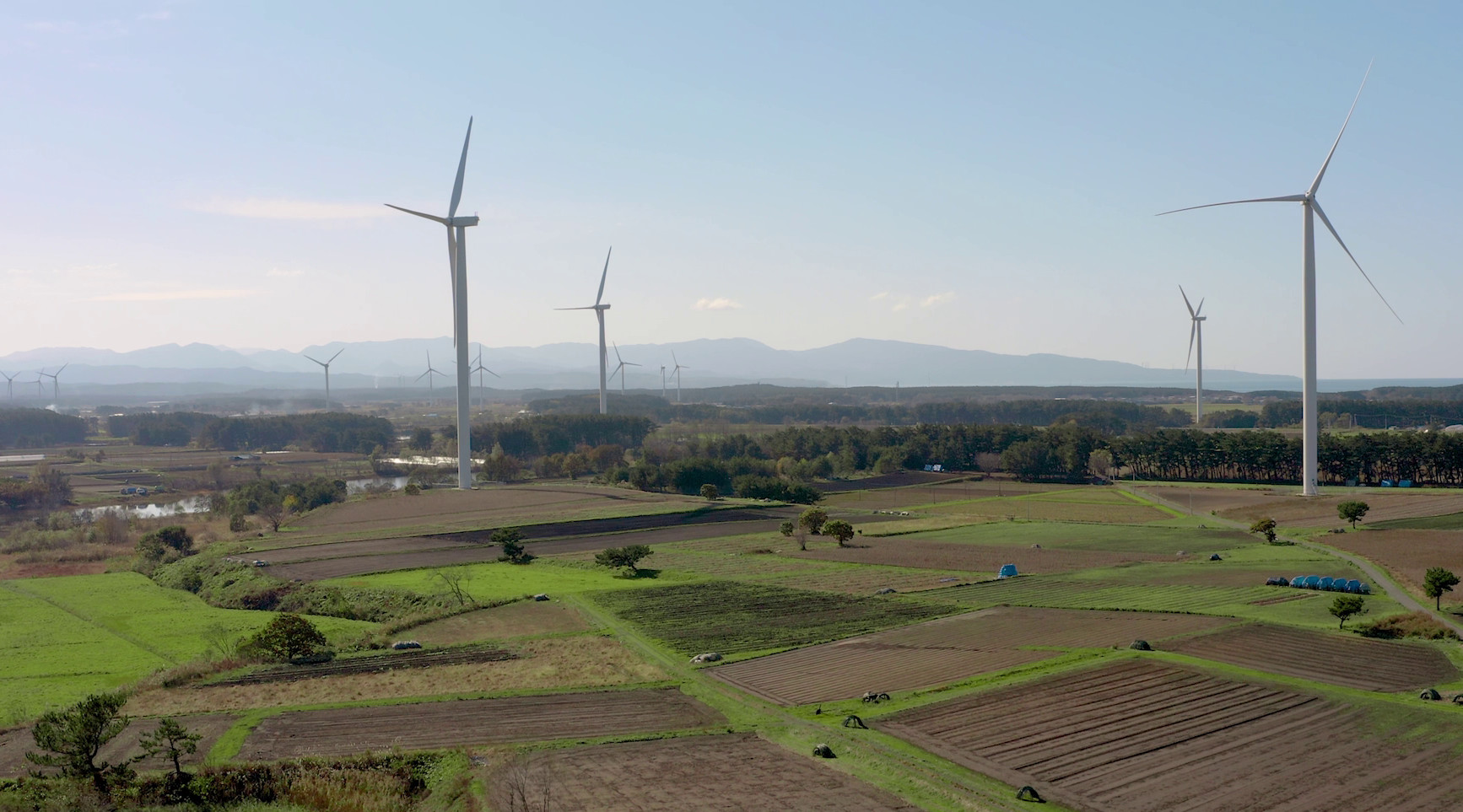
Since hydrogen is a next-generation clean energy source that does not emit carbon dioxide, its demand will grow in the near future to achieve a carbon-neutral society. While renewable energy sources such as solar and wind are on the rise, the potential of hydrogen energy is less commonly understood. For example, hydrogen is storable and transformable so it will be critical for augmenting wind and solar when they cannot provide enough energy due to uncooperative weather.
Since an energy source such as solar can be converted to hydrogen, it can be stored if there’s a surplus. That means surplus solar electricity produced in the summer when the sun is hot and bright, can be used in winter, shifting energy use across seasons. This is known as “shifting time” in energy use.
Another benefit of hydrogen energy is “shifting locations.” Currently, power grids don’t have the capacity to connect renewable energy production areas to large-scale consumption areas, such as cities. Hydrogen, however, overcomes this issue since it can be transported by trailers or pipelines, not using the existing power grid, making it possible to deliver renewable energy great distances into urban regions, or into remote areas where the power grid doesn’t reach.
Moreover, the applications of hydrogen energy are unlimited, which is critical at a time when energy consumption has never been greater and is expected to grow exponentially with the demands of computing in the age of Artificial Intelligence. Industry research shows that AI is poised to drive a 160 percent increase in power demand by 2030, according to Goldman Sachs. In October 2025, NTT DATA issued a white paper that concluded AI’s growing demand for resources is unsustainable unless lifecycle thinking and circular-economy principles are applied.
So, to meet increased demand for hydrogen energy in the future, NTT Anode Energy is working with companies such as the Panasonic Group. Together we are developing a hydrogen supply chain that produces, stores, transports, and uses hydrogen. This supply chain needs to be designed for safety, to stably transport large volumes of hydrogen and to create electricity in each region and field of use, so that it can be available to everyone globally in the future.
Expo 2025 visitors see the future of hydrogen energy in action
Osaka Expo 2025 provided the opportunity for NTT Anode Energy and Panasonic to better educate the 25 million Expo visitors about the real-world potential of hydrogen energy. Together, the two companies brought the hydrogen supply chain model to life in a way people could experience first-hand, learning how it worked and understanding the potential to change the world.
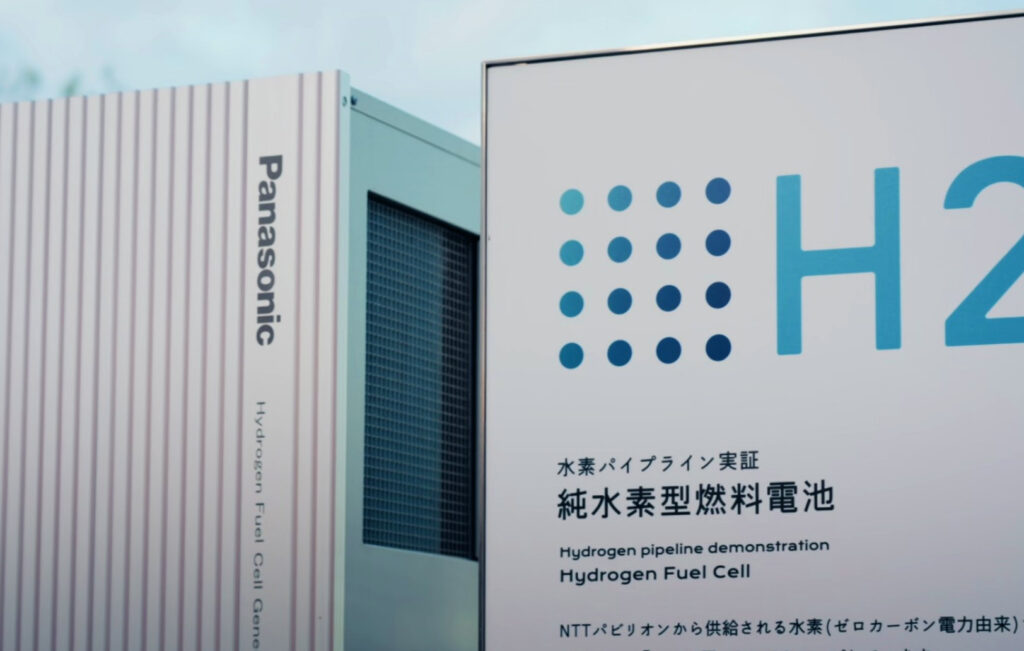
For this demonstration, NTT installed a renewable energy power plant on site at its Expo 2025 pavilion that produced hydrogen energy. The energy was then stored in a hydrogen fuel cell made by Panasonic. A pipeline was run underground for 200 meters from the NTT pavilion to the Panasonic Group pavilion, allowing the energy to be transported to another fuel cell at the Panasonic Group pavilion.
NTT Anode Energy exemplified its expertise in energy creation and distribution for the demonstration at the NTT Pavilion – critical parts of the hydrogen supply chain. Panasonic also demonstrated the storage and use of hydrogen energy at both the NTT and Panasonic Expo 2025 Pavilions – such as the spectacular LED illumination that helped tell the supply chain story to visitors in a beautiful and compelling way.
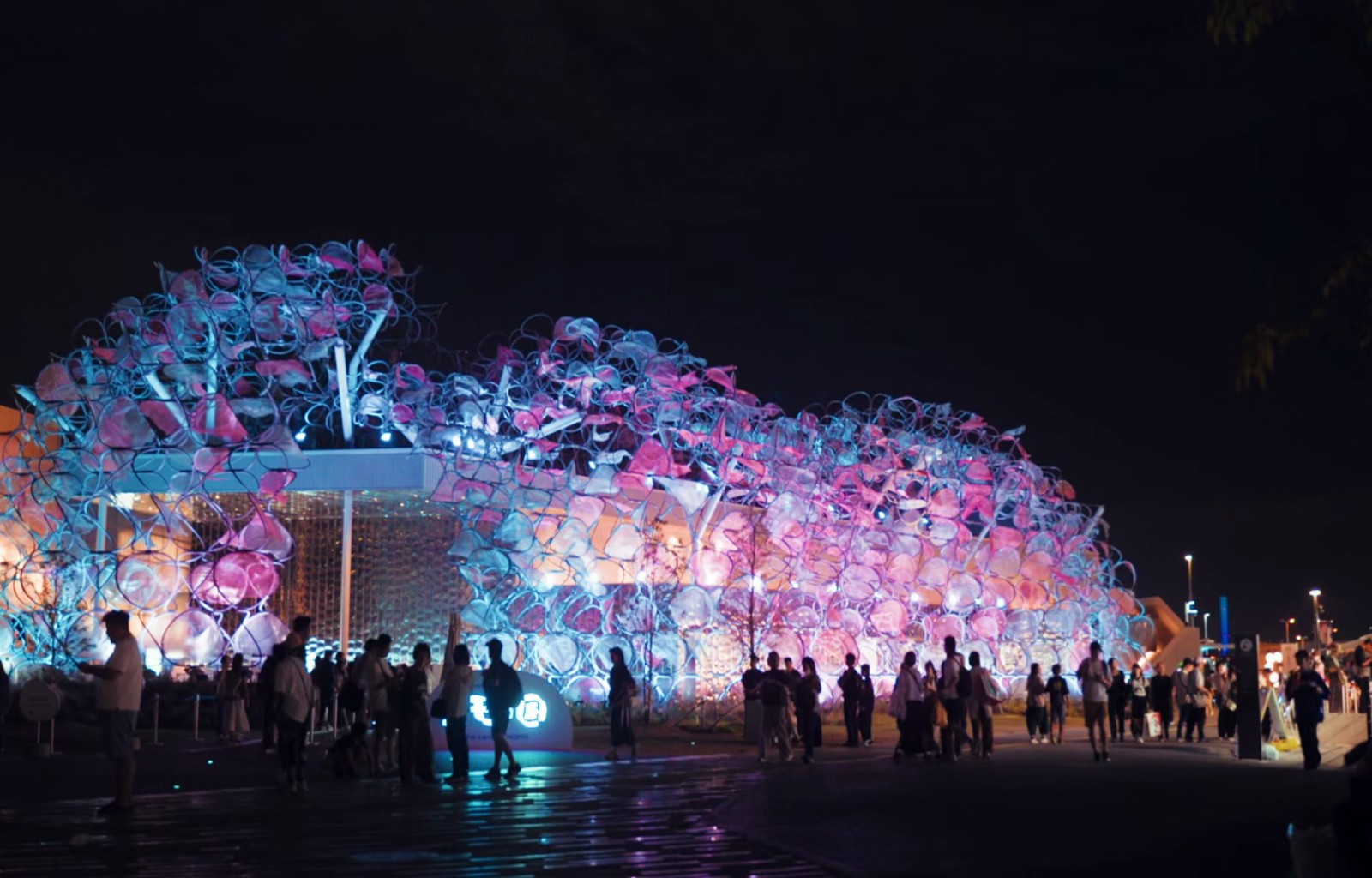
This installation was a first of its kind, as it showed what an in-house hydrogen plant in an urban setting could do for the future of powering cities, in a safe and thoughtful manner.
The Expo partnership between NTT Anode Energy and Panasonic is one example of how hydrogen energy could become a reality and implemented in Japan.
Green energy projects in action
The future of hydrogen energy is a primary focus for NTT and Panasonic, and each company is taking important steps toward carbon neutrality.
For example, Panasonic is independently developing “Panasonic HX,” the hydrogen-based energy solution focused on the future of energy management systems (EMS). EMS are decentralized and efficient energy solutions aiming to create decarbonized and resilient facilities. Some of the Panasonic’s projects include:
-

Panasonic HX Kusatsu:
A demonstration facility integrating hydrogen fuel cells, solar panels, and storage batteries to develop and verify optimal power supply technology using EMS, with the aim of supplying 100 percent renewable energy to Panasonic’s fuel cell manufacturing factory in Kusatsu, Shiga Prefecture, Japan.
-
Panasonic HX Cardiff:
An in-house hydrogen-based renewable energy power generation system installed in Panasonic’s factory in Cardiff, UK, where the weather changes frequently. The factory utilizes heat generated by fuel cell generation to preheat water for the air conditioning system, in addition to demonstrating optimal power supply by EMS.
-
Panasonic HX Munich:
Germany’s first demonstration of a fuel cell-powered customer experience center, located in Munich, integrating hydrogen fuel cells and existing solar panels. It has been installed in a narrow space within an office where installation locations are limited, making the demonstration closer to commercialization.
Realizing a decarbonized society
The demonstration of the hydrogen energy supply chain at Osaka Expo 2025 put the spotlight on the future of clean power. At NTT Anode Energy, it’s a future being both designed and realized today, playing a critical role in the targets set by governments around the world to create a carbon-neutral society.