July 29th, 2026
4 min read
AI today is scaling faster than the infrastructure that exists to support it. As adoption accelerates, models grow larger and more data-intensive—and the limiting factor is no longer compute alone, but whether the underlying systems can supply power, move data efficiently and sustain continuous operation at scale.
“Demand for digital infrastructure is surging—more data centers, more servers and exponentially more computing power. The trade-off is clear: a steep rise in electricity consumption.”
Reimagining the Data Center
Data center design has conventionally focused on managing heat and density, packing more computing power into the same footprint and compensating with cooling technologies. However, this approach is proving unsustainable as AI workloads scale in tandem with the environmental impact of increased power demands and water usage.
The constraint on compute is shifting beyond cooling to the energy consumed and lost inside the computing systems themselves. Today’s interconnects for CPUs, GPUs, boards and chipsets still rely on electronic transmission. At scale, even very short electrical connections generate significant heat and power consumption—and as AI workloads intensify, these electronic pathways are nearing their physical limits.
One response is to innovate and develop new cooling technologies. Another is to reduce the amount of energy used for data transmission in the first place.
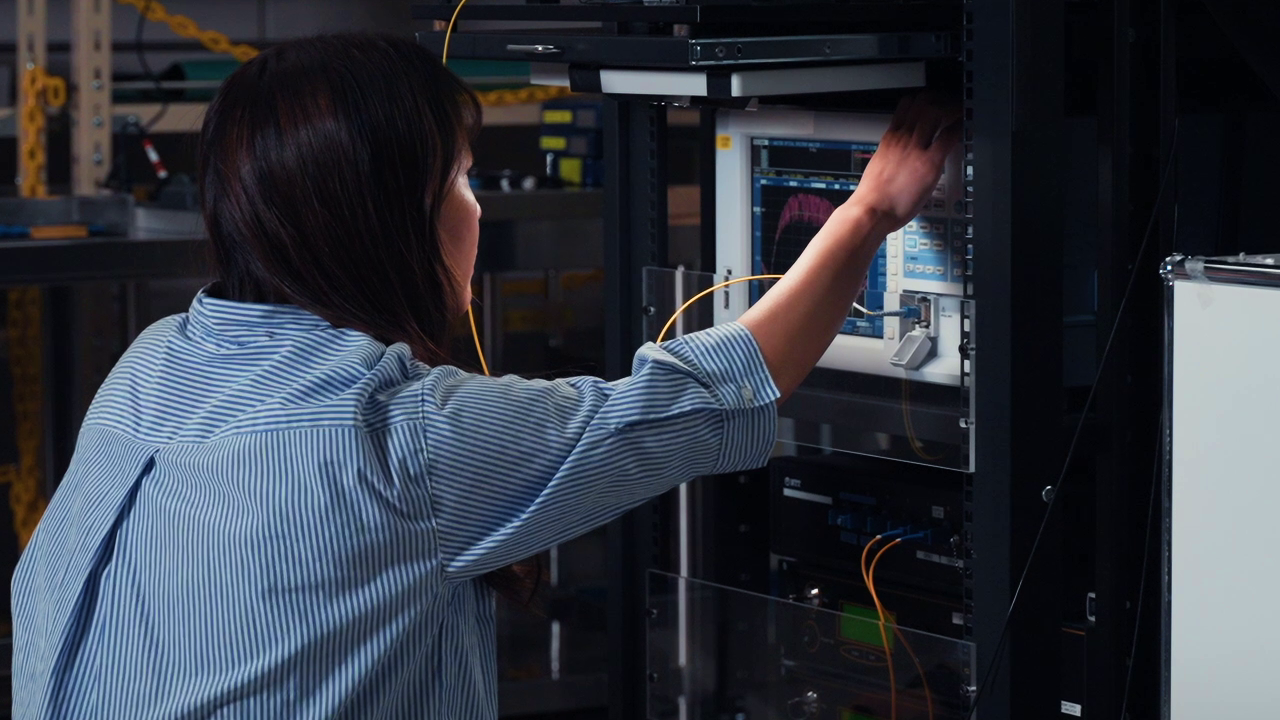
Photonics-electronics convergence (PEC-2) addresses that second path. By replacing electrical signaling between components with optical transmission inside computing systems, PEC-2 reduces the power consumed by data movement at AI scale. As light moves closer to the processing logic, energy consumption decreases and performance improves. This is not a marginal upgrade but a structural shift—moving computing beyond electrical constraints and toward optical advantage.
NTT plans to begin commercial supply of PEC-2 devices in 2026, positioning optical interconnects as a near-term foundation for AI-scale infrastructure. The model is already being tested in practice through NTT’s Green Nexcenter initiative, including a deployment at Osaka 7, one of Japan’s first NVIDIA DGX-Ready facilities.
At Osaka 7, photonics-based interconnects are paired with high-density compute and renewable energy integration. The result is a data center that is fundamentally more efficient before cooling systems are engaged. Cooling technologies remain essential, but are no longer the only way to compensate for the sharp increase in transmission-related energy use.
Inside the Data Centers of Tomorrow
A new architecture for AI-scale performance—with sustainability engineered at every layer
-

Renewable Energy Integration
Renewable-sourced electricity lowers operational emissions and stabilizes energy costs.
-
High-Density Liquid Cooling
Liquid cooling boosts thermal efficiency for AI clusters while significantly reducing power used for cooling.
-
AI-Optimized GPU Hosting
Purpose-built racks for dense AI and accelerated computing platforms, including NVIDIA DGX workloads.
-
Photonics-Electronics Convergence (PEC2)
Optical data transfer inside computing systems reduces energy loss, heat generation and latency associated with electronic interconnects.
From Fixed Infrastructure to Distributed Compute
Even with more efficient computing systems, AI infrastructure remains constrained by where power and capacity are available. High-density AI systems concentrate demand for energy and cooling in specific locations, tying expansion to local grid capacity and infrastructure limits.
NTT’s All-Photonics Network (APN) addresses this constraint by replacing end-to-end electrical transmission with optical links, allowing large volumes of data to move with ultra-low latency and significantly lower power consumption. Under IOWN, these optical connections allow data centers to function as a unified system rather than isolated facilities.
In August 2024, NTT and Chunghwa Telecom activated the first international APN linking Taiwan and Japan with a 100-Gbps optical path over nearly 3,000 kilometers, with transmission speeds approaching the speed of light. In another demonstration, data centers connected between Fukuoka and Osaka shifted live workloads in near real time based on renewable energy availability, allowing compute to migrate dynamically without disrupting performance. Similar trials in the U.S., U.K., and India suggest this model can operate at global scale, allowing AI workloads to run where power and infrastructure conditions are optimal rather than where hardware is physically located.
“Optical technologies allow us to break through the limits of energy consumption and conventional computation. In the quantum era, we unlock solutions once thought impossible.”
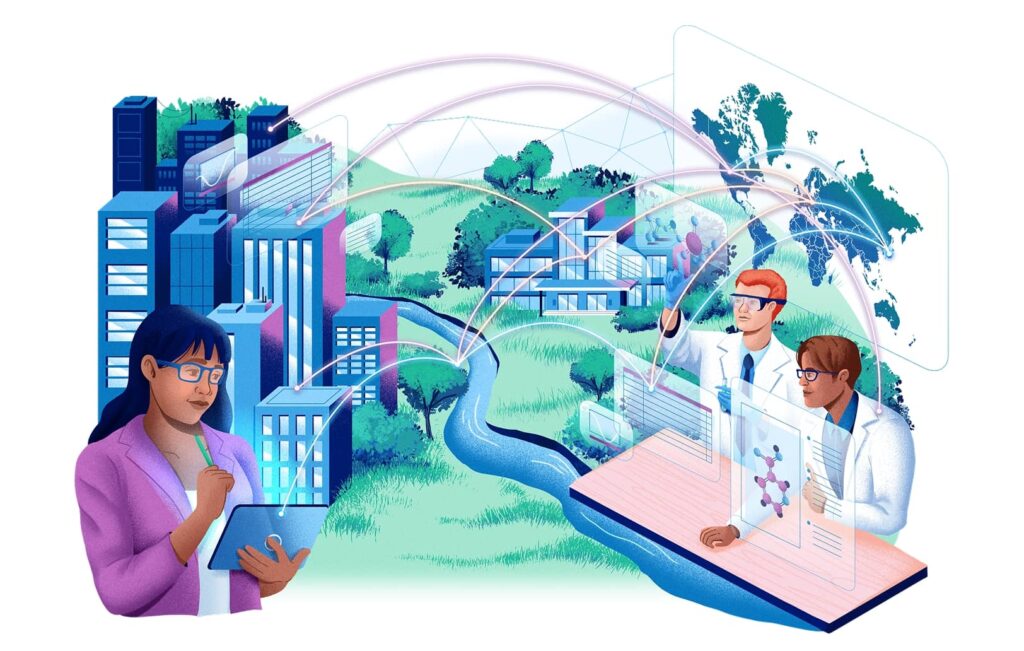
This also changes how advanced computing is accessed. Using APN, organizations can tap high-performance GPU clusters hosted in specialized facilities without building or operating the infrastructure themselves. At Shonan iPark in Japan, pharmaceutical researchers used remote GPU infrastructure for AI-driven drug discovery with latency low enough for real-time analysis. Data remained secure, bandwidth was stable and researchers gained access to compute that would otherwise have required significant capital investment and long-term energy commitments.
The IOWN Global Forum has since validated this model as an industry-level use case. The effect is expanded access: advanced AI infrastructure becomes available beyond large hyperscalers and energy-rich regions, allowing more organizations to participate in AI development.
Distributed AI Workloads in Action
How APN-enabled workload mobility unlocks greener, more resilient compute.

Paving the Way for Quantum
The same optical technologies now being deployed to scale AI infrastructure form the foundation for NTT’s approach to quantum computing. Some computational challenges, including large-scale logistics optimization, materials simulation and drug discovery, involve intricacies that classical supercomputers struggle to manage. Quantum computing changes the equation, making it possible to evaluate many possibilities at once and tackle levels of complexity previously out of reach.
Most quantum systems today require extreme environments—ultra-low temperatures and vacuum chambers. But NTT is pursuing a different approach. “By using optical communication technologies to carry quantum information, these systems can operate at room temperature and normal atmospheric pressure,” Shimada says. “This dramatically reduces power consumption and infrastructure complexity offering a realistic path to scalability with outstanding power efficiency.”
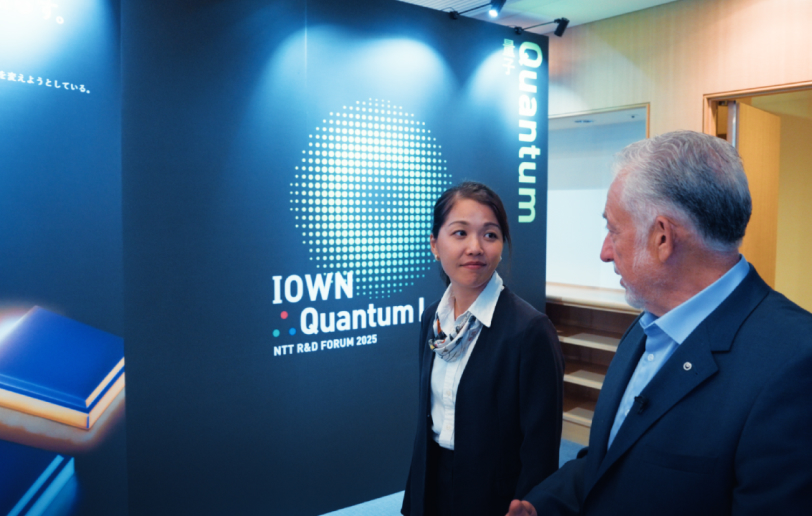
NTT’s roadmap targets one-million-qubit–class optical quantum systems by 2030, followed by scaling to 10 million and ultimately 100 million qubits. “Optical technologies allow us to break through the limits of energy consumption and conventional computation,” Shimada says. “In the quantum era, we unlock solutions once thought impossible.”
AI and quantum computing are exposing the limits of infrastructure built for a different era. Scaling intelligence now depends less on adding capacity than on whether systems are designed to operate under energy, geographic and operational constraints. For enterprises, the advantage will go to those whose infrastructure can absorb volatility without slowing deployment. NTT’s work points to how photonics is redefining the foundation on which advanced computing systems are built.
Wall Street Journal Custom Content is a unit of The Wall Street Journal advertising department.
The Wall Street Journal news organization was not involved in the creation of this content.