July 29th, 2026
4 min read
Smarter farming through data
Japan’s livestock industry is under threat from mounting challenges. An aging farming population, labor shortages, rising production costs, and increased global competition are making it harder for farms to operate profitably and sustainably.
These pressures have major implications for food security and the future stability of the agriculture industry. Similar trends face other countries around the world.
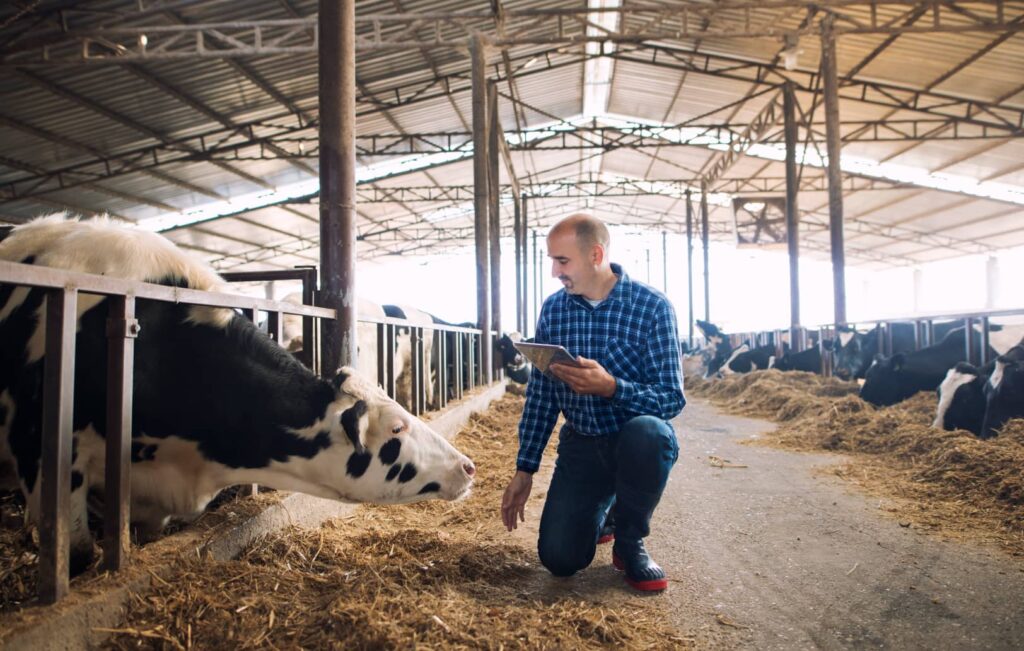
At the same time, cattle herd sizes are growing. This makes it increasingly difficult for farmers to closely monitor their animals’ health and welfare, including the cattle’s access to water tanks and feeding troughs, floor conditions, social behaviors, and pain management.
One particularly serious concern is dysstasia, a condition where cattle become unable to stand. If not addressed quickly, it can be fatal for the animal. Beyond the financial impact, conditions like dysstasia represent a significant animal welfare concern — a slow and painful death that farmers who care deeply about their animals find distressing.
Solving these challenges is critical for the livelihoods of farmers, and for building a humane and long-lasting global food system.
How smart farming technology is preventing cattle losses
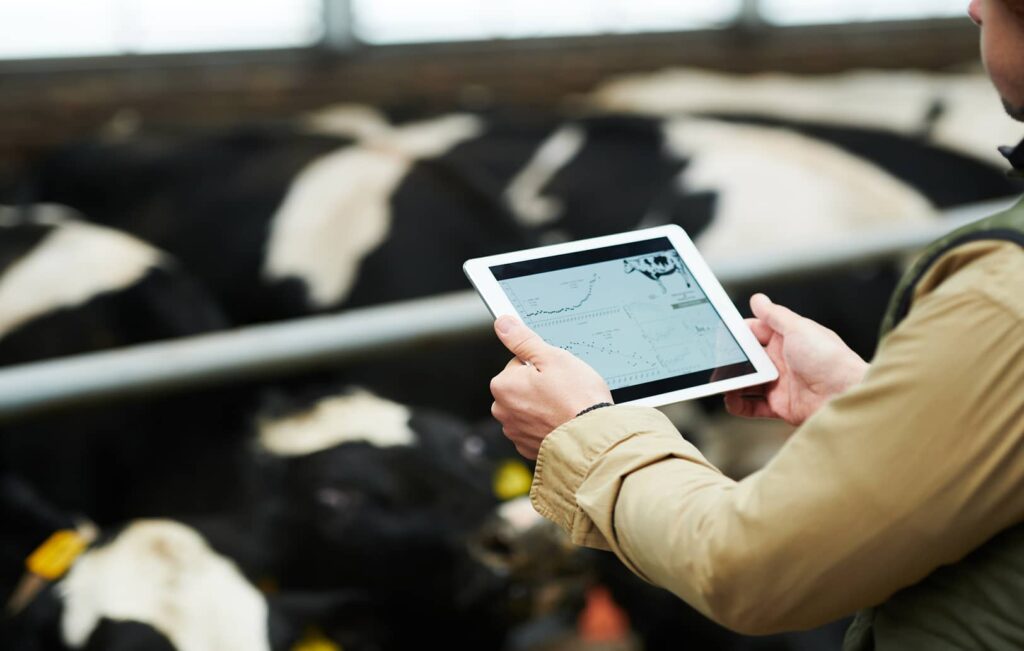
Two NTT TechnoCross projects are helping to digitally transform the livestock industry using AI-powered cattle monitoring, behavioral analysis, and IoT-connected technologies. And these smart livestock monitoring projects draw from the knowledge of farmers themselves.
NTT TechnoCross and its partner Desamis Co., Ltd. developed U-motion®, a cattle-mounted sensor system that visualizes cattle behavior data and enables farmers to remotely monitor herd health.
Building on insights gathered through repeated on-site farm visits, NTT TechnoCross also developed BUJIDAS, a video analytics AI system that detects dangerous cattle posture changes and automatically prompts cattle to stand. The system also sends mobile alerts to farmers, allowing remote intervention and reducing the need for constant overnight monitoring.
U-motion: AI-powered livestock monitoring
U-motion is a service provided by Desamis using sensor tags developed and supplied by NTT TechnoCross. It visualizes and analyzes behavioral data collected from sensors attached to cattle, enabling the detection of disease symptoms, mobility disorders, calving indicators, and estrus signs indicating when a cow is ready to be bred.
U-motion technology allows for the visualization of feeding behaviors and early alerts of diseases based on the collected behavioral data, ultimately leading to the early detection and appropriate treatment of pain. We believe these efforts are applicable to global trends as well.
Indeed, while commercial deployment of U-motion is primarily happening in Japan, experiments using the technology have also been done in Denmark and Indonesia as NTT TechnoCross works to make the technology available around the world.
NTT TechnoCross and Desamis are also continuing to advance the field of smart livestock farming by deepening data analysis, enhancing visualization, and increasing the interconnectivity of various data types. Their aim is to create new value that contributes to productivity improvements for farmers and optimization of breeding management.
BUJIDAS: Turning farmer knowledge into AI
NTT TechnoCross combined advanced AI technology with the real-world experiences of farmers to develop the video analytics AI system BUJIDAS.
Visiting farms was key to the development of BUJIDAS. By observing and hearing from farmers, researchers learned about conditions such as dysstasia – when cattle remain in a lying position for an extended period, the entrance to the stomach can become blocked, preventing the cow from releasing gases. If this condition persists, the stomach expands and presses against the diaphragm until the cattle can no longer stand up on their own. This can result in respiratory distress, shock, and death.
However, during those farm visits, researchers also discovered a critical piece of tacit farmer knowledge: cattle at risk of dysstasia can often recover if they are encouraged to stand early enough.
By combining the farmers’ insights with video analytics AI, NTT TechnoCross created BUJIDAS, a system capable of automatically monitoring cattle posture and issuing voice prompts to encourage cattle to stand up. Farmers using the system reported that, since the service launch approximately two years ago, there have been zero fatalities at cattle barns where the system has been implemented.
With BUJIDAS, the burden of nighttime inspections has been reduced. Hitomi Oya, Assistant Manager, NTT TechnoCross, shares the story of one farmer involved in the research project: “Previously, even when the family went out, the farmer was always concerned about the cattle and would be anxious to return home quickly. However, with the ability to monitor the cattle remotely, his sense of security increased. As a result, the couple was able to take their first overnight trip to Tokyo, which brought them great joy.”
Why NTT TechnoCross is advancing animal welfare through livestock AI
NTT TechnoCross has the expertise in IoT sensors, video analytics AI, and field-driven innovation to transform farmers’ knowledge into digital solutions. These solutions can protect the health of cattle and support the financial stability of farmers and the agricultural industry – helping to ensure safe and secure food production.
These projects did not happen overnight. For instance, since 2017, NTT TechnoCross has been working to find ways to remotely detect when cattle are unable to stand, and to address the problem. Through years of data accumulation and field testing, researchers grew to understand how video analysis AI and auditory stimulation can effectively contribute to preventing this issue, and keeping cattle healthy. This led to the creation of BUJIDAS.
Until we actually saw cattle being prompted to stand up by the automated voice system, there was still some skepticism. Witnessing that moment, we realized that this solution could safeguard not only the lives of the cattle but also the health of the farmers. This experience remains a strong and memorable impression for us.
Smart livestock technologies like U-motion and BUJIDAS are not just replacements for on-site tasks. They are also considered tools that can assist in and visualize the tacit knowledge of experienced workers, serving as a foundation to support the transfer of this knowledge to future generations.
Building the future of food production
As livestock AI and connected farming technologies continue to evolve, the future could include fully integrated smart farms capable of continuously monitoring animal health, stress levels, movement, feeding behavior, and environmental conditions in real time, contributing to productivity improvement and optimization of breeding management.
Advanced predictive AI systems may eventually identify illnesses days before visible symptoms emerge, allowing preventive treatment and reducing both economic losses and animal suffering. Combined with automation and cloud-based analytics, these technologies can help address labor shortages while improving sustainability, animal welfare, and food security on a global scale.
The future of food production will require deep integration of human expertise and technology. By combining an extensive understanding of real-world farming knowledge with advanced AI, sensing and data analytics, NTT is transforming practical expertise into scalable solutions that address the critical challenges of food production and environmental resilience.